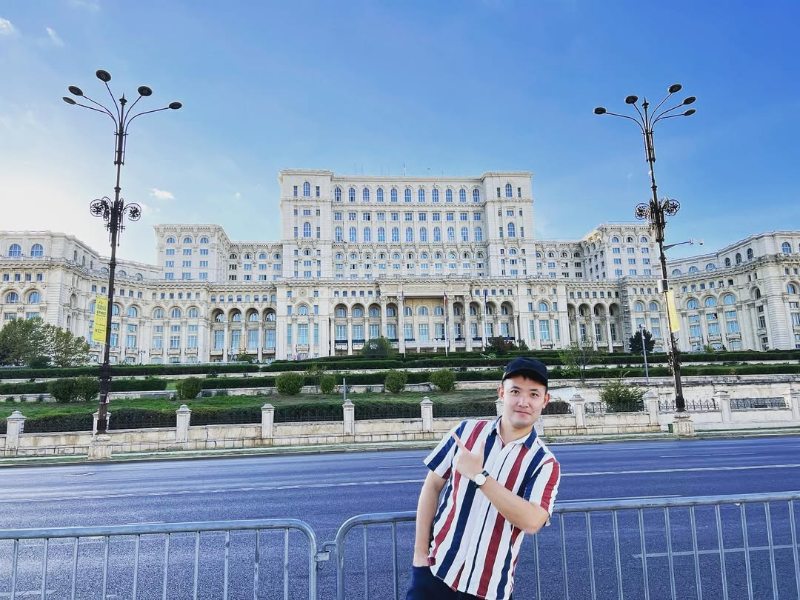
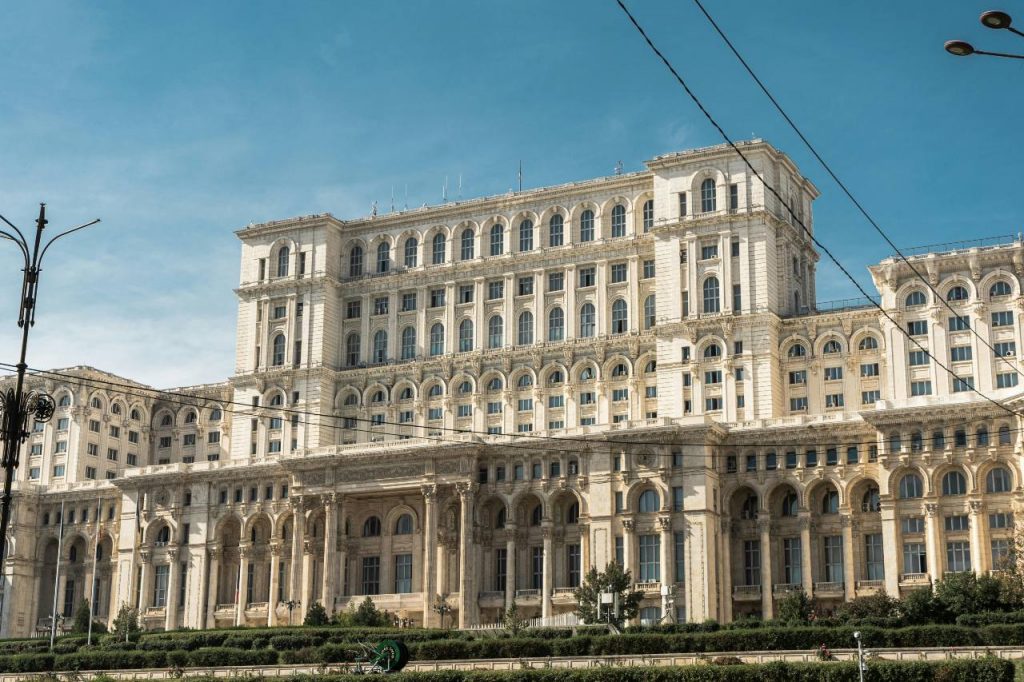
A colossal symbol of power, ambition, and history, the Palace of the Parliament dominates the heart of Bucharest. Rising above the city’s central boulevard, this monumental structure is one of the largest buildings in the world and a defining landmark of Romania’s capital.
Known in Romanian as Palatul Parlamentului and originally called the Casa Poporului (“People’s House”), the building stands as a powerful reminder of the country’s recent past. It was conceived during the 1980s under Nicolae Ceaușescu’s leadership and remains one of the most significant architectural achievements of that period (some also call it “Ceausescu Palace”).
Today, the Palace of the Parliament houses Romania’s Parliament and several key national institutions, while also welcoming visitors from around the world. Its vast halls, intricate decorations, and impressive proportions make it one of Europe’s most remarkable examples of modern neoclassical architecture.
Quick Interesting Facts
Palace of Parliament History
Origins and Conception
The idea for what would become the Palace of the Parliament took shape in the early 1980s, during the massive urban restructuring program led by Nicolae Ceaușescu. Inspired by his 1971 visit to North Korea, where he was impressed by the monumental scale of Pyongyang’s architecture, Ceaușescu envisioned a new Civic Center (Centrul Civic) in Bucharest — a monumental complex that would serve as the political and administrative core of socialist Romania. At its heart would stand the Casa Poporului (“People’s House”), a building meant to represent the strength and unity of the Romanian people under his leadership.
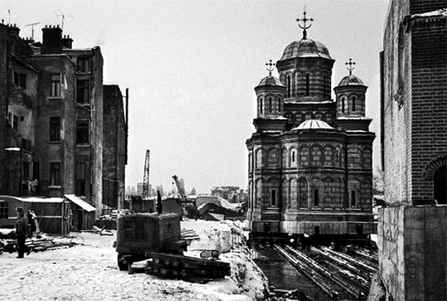
To make space for this vast project, an entire area of Bucharest — the Uranus–Izvor district — was demolished. This was one of the oldest and most architecturally diverse neighborhoods in the capital, home to churches, schools, hospitals, and thousands of family residences. Between 1982 and 1984, approximately 9,000 buildings were torn down, including 28 historic churches, 6 synagogues, and over 20 hectares of residential streets. More than 40,000 residents were relocated to newly built apartment blocks on the outskirts of the city.
The destruction of the Uranus area permanently changed Bucharest’s urban landscape. Narrow streets and 19th-century houses were replaced with wide boulevards, geometric avenues, and monumental squares designed to frame the Palace as the focal point of the new Civic Center.
In 1983, a national architecture competition was organized to select the project’s lead designer. The winner, Anca Petrescu, was only 28 years old at the time. Under her leadership, a team of hundreds of architects and engineers began working on an architectural concept that would combine neoclassical symmetry with socialist monumentalism. The vision was clear: to build a structure that reflected both national pride and political authority — an emblem of a new Romania reshaped under Ceaușescu’s direction.
Construction officially began in June 1984, marking the start of one of the most ambitious architectural undertakings in the country’s history.
Construction Phase
Construction of the Palace of the Parliament began in June 1984 and soon became one of the largest and most labor-intensive projects ever undertaken in Romania. At its peak, more than 20,000 workers and 700 architects were involved, working in continuous shifts, day and night. The pace was extraordinary, reflecting the government’s determination to complete the project quickly despite the country’s economic strain.
The building was designed to combine monumental architecture with precise craftsmanship. Every element — from carved oak doors and marble staircases to crystal chandeliers — was made in Romania. Materials were sourced from across the country: marble from Transylvania, wood from the Carpathian Mountains, crystal from Mediaș, and textiles from Moldova and Oltenia.
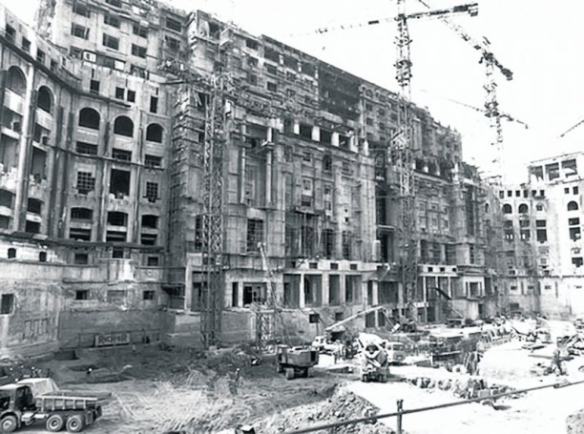
By 1989, when the communist regime came to an end, much of the exterior and structural work had been completed. The interior, however, remained unfinished, with many rooms still under construction or awaiting decoration. Work continued intermittently during the following decade, and the main structural completion was achieved in 1997.
The scale of the project remains staggering: the palace covers an area of 365,000 square meters, includes over 1,000 rooms, and descends eight levels underground. Even today, parts of the building remain unused or under renovation, illustrating both the ambition and the complexity of its original design.
Post-1989 Revolution
After the fall of Nicolae Ceaușescu in December 1989, the future of the Palace of the Parliament became a subject of national debate. For many Romanians, the building was a symbol of the communist regime’s excess and the sacrifices imposed on the population during its construction. Yet, others viewed it as a remarkable architectural and technical achievement that should be preserved and repurposed.
In the early 1990s, several proposals were discussed, ranging from transforming the building into a museum to abandoning it altogether. Ultimately, it was decided that the structure would serve a public function. In 1994, the Romanian Parliament officially moved its headquarters into the Palace, giving the monumental space a new democratic role within the country’s political system.
Over the years, the building has also come to house other national institutions, including the Romanian Senate, the Chamber of Deputies, and the Constitutional Court. It serves as a venue for international conferences, cultural events, and official state ceremonies.
Public access began gradually in the 1990s, and guided tours soon became one of Bucharest’s most visited attractions. The Palace’s transformation from a symbol of political power into a center for civic activity and cultural exploration reflects Romania’s broader journey from its communist past toward a modern democratic society.
Nowadays
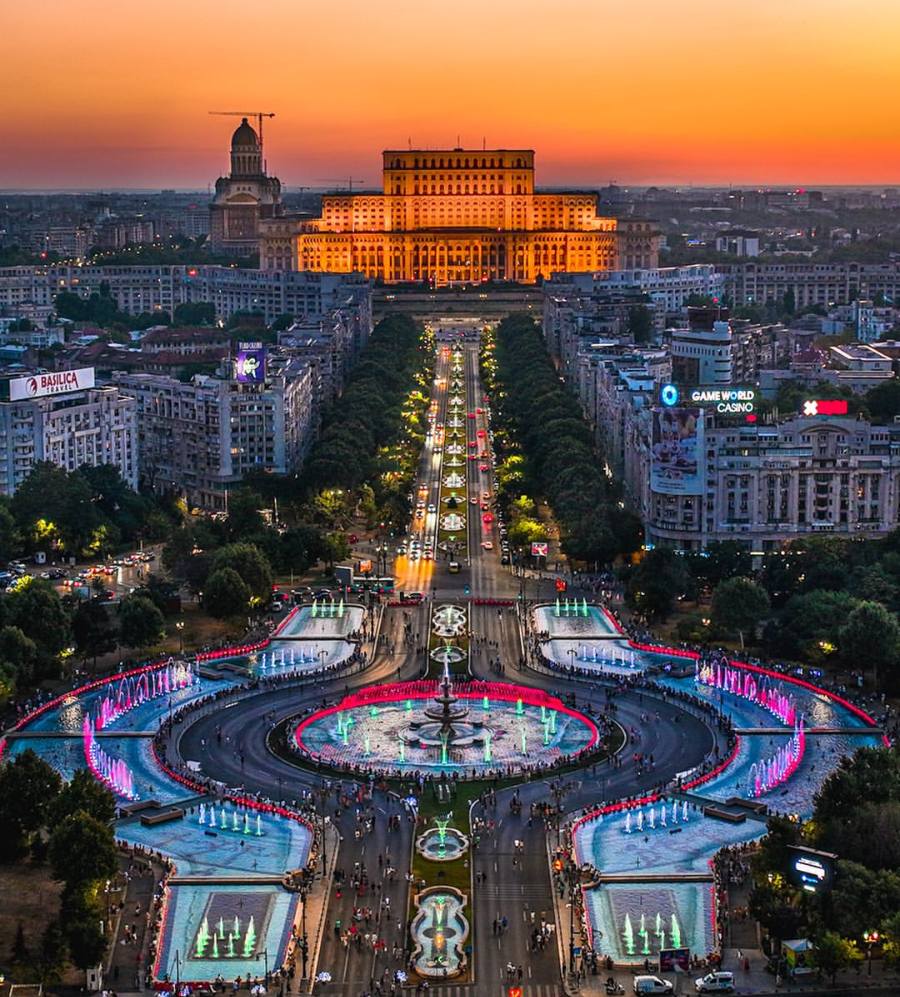
Today, the Palace of the Parliament stands as both a center of Romanian political life and one of the country’s most visited landmarks. It houses the Chamber of Deputies, the Senate, and several other key national institutions, including the Romanian Legislative Council and the Romanian Constitutional Court. Beyond its governmental role, the building has become an active venue for international conferences, exhibitions, and cultural events, reflecting its evolution from a symbol of political authority to one of civic engagement and national representation.
A significant portion of the building is open to the public through guided tours that showcase the most impressive halls, staircases, and galleries. Visitors can explore vast marble corridors, admire the hand-crafted decorations, and learn about the building’s complex history and ongoing role in Romania’s democracy. Tours are available in multiple languages and can be booked in advance, both individually and for groups.
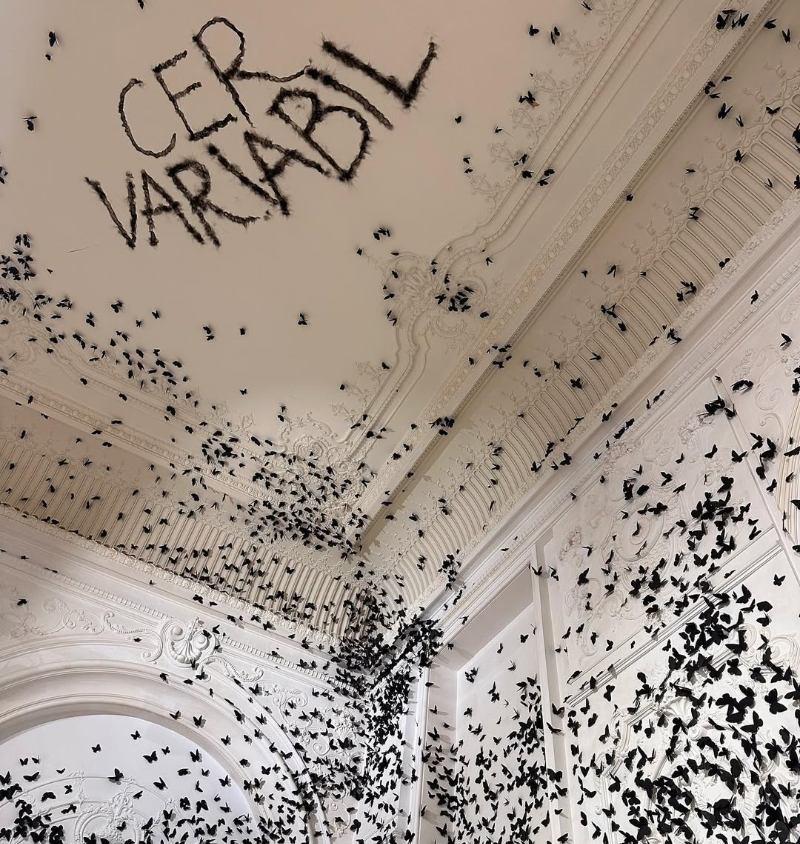
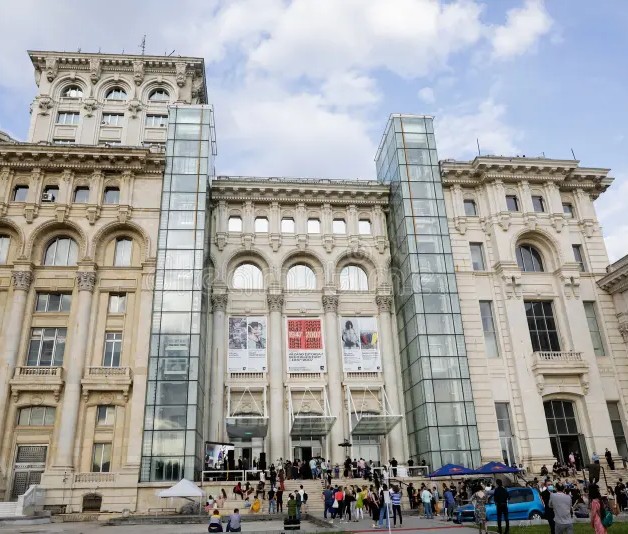
In addition to its governmental and touristic functions, the Palace also houses several museums and organizations, including the National Museum of Contemporary Art (MNAC), which occupies the building’s western wing. Concerts, art exhibitions, and state receptions are regularly hosted in its halls, offering a dynamic contrast between its monumental past and its modern-day cultural use.
Although maintenance and energy costs remain considerable — the Palace consumes as much energy as a small city — it continues to serve as a functioning and evolving institution at the heart of Bucharest. The building’s blend of political, cultural, and architectural significance makes it one of the most distinctive and frequently visited landmarks in Eastern Europe.
Architecture
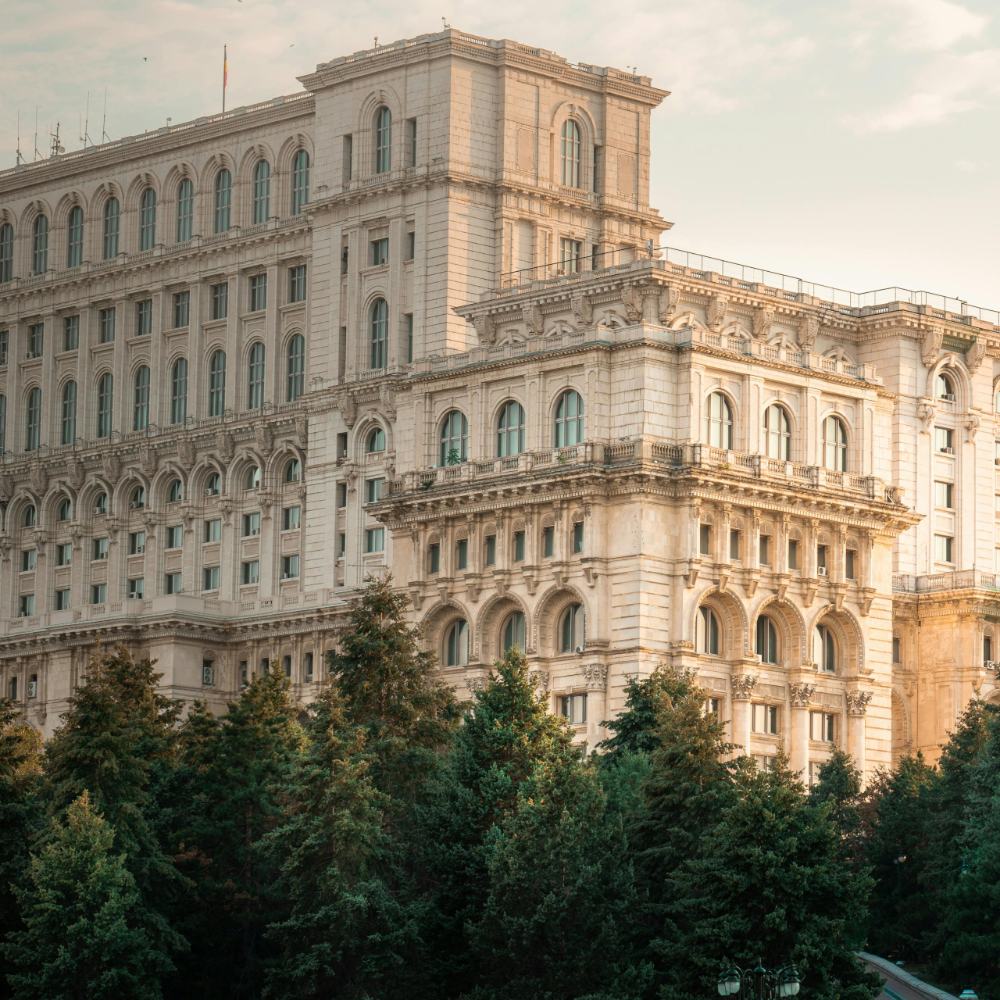
The Palace of the Parliament is one of the most ambitious architectural projects of the 20th century, notable both for its immense scale and for the precision of its craftsmanship. Designed in a neoclassical style blended with elements of socialist realism, the building reflects a vision of authority, symmetry, and national pride. Its monumental proportions were intended to convey power and stability, while the richness of its materials showcased Romania’s natural and artistic resources.
Technical Details
Covering an area of approximately 365,000 square meters, the Palace reaches a height of 84 meters above ground and extends 92 meters below, including eight underground levels — one of which is an unfinished nuclear bunker. The building contains more than 1,000 rooms, over 2 million cubic meters of marble, and 3,500 tons of crystal. Some of the chandeliers alone weigh over a ton.
The structure was built entirely with Romanian materials and resources. Marble was sourced from Transylvania and Dobrogea, wood from the Carpathian Mountains, crystal from Mediaș, and rich textiles and carpets from Moldova and Oltenia. This decision was both symbolic and practical — it highlighted national self-sufficiency while ensuring that every detail contributed to a unified Romanian aesthetic identity.
Design and Symbolism
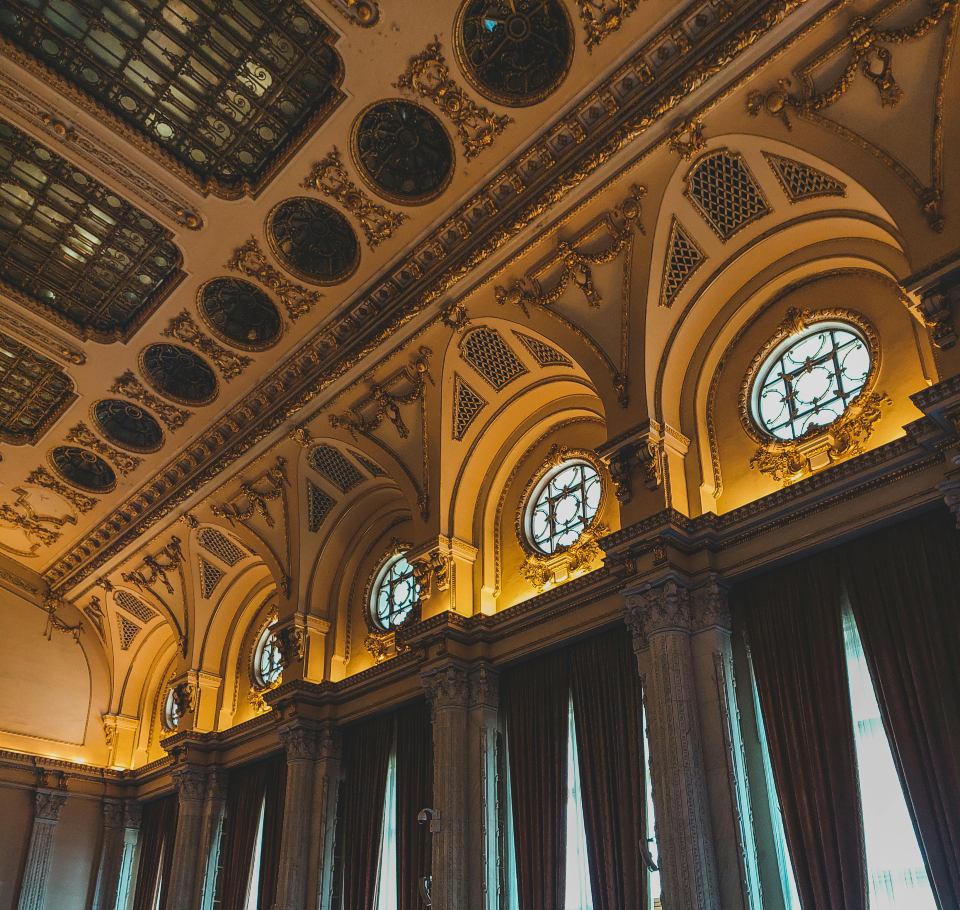
Architect Anca Petrescu envisioned the building as the centerpiece of Bucharest’s new Civic Center. Its geometric layout, grand facades, and symmetrical composition were designed to represent order and discipline, qualities closely tied to the political ideals of the time. The neoclassical influences are evident in the columned porticos, wide staircases, and balanced proportions, while the monumental scale reflects the ideology of socialist realism — architecture intended to inspire awe and obedience.
Inside, the design emphasizes grandeur and repetition. Long corridors, large ceremonial halls, and expansive staircases create a rhythm of scale that reinforces the building’s authority. Decorative motifs such as oak leaves, laurel wreaths, and traditional Romanian patterns appear throughout, merging political symbolism with national cultural identity.
Despite its origins in a period of strict state control, the Palace of the Parliament remains an exceptional achievement in architectural and technical terms. It stands as a symbol of both the ambition and the contradictions of the era that produced it — a building where national pride, political ideology, and artistic excellence coexist on a monumental scale.
Inside the Palace of Parliament
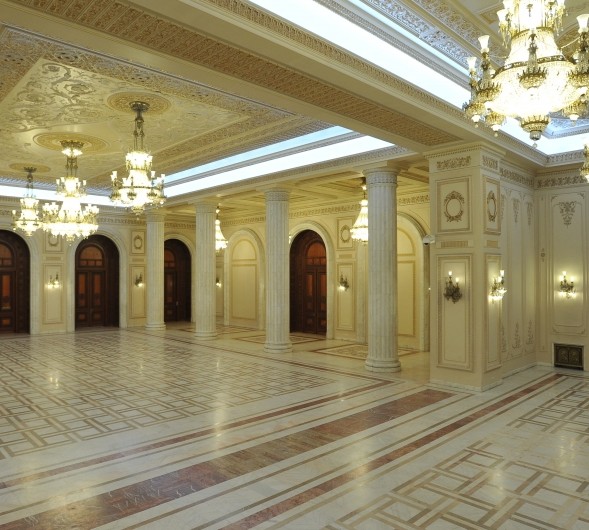
Behind its monumental exterior, the Palace of the Parliament reveals an interior designed to impress with both scale and detail. Every room was carefully planned to highlight the grandeur of Romanian craftsmanship — marble walls, hand-carved woodwork, crystal chandeliers, and richly woven carpets define the space. Despite its vastness, each hall and corridor maintains an aesthetic coherence that reflects the same neoclassical vision seen in the exterior architecture.
Entrance and Main Staircase
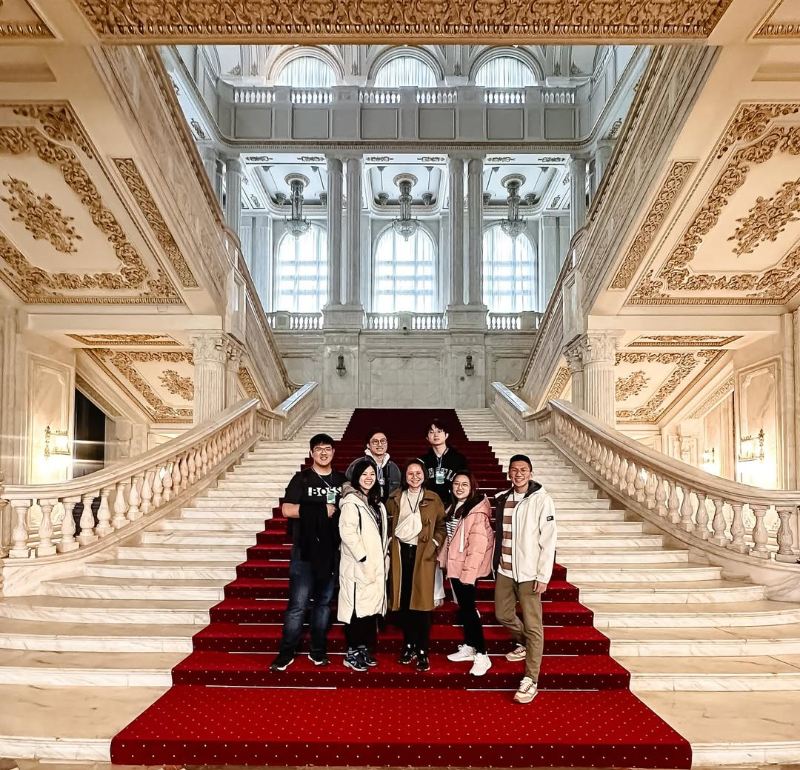
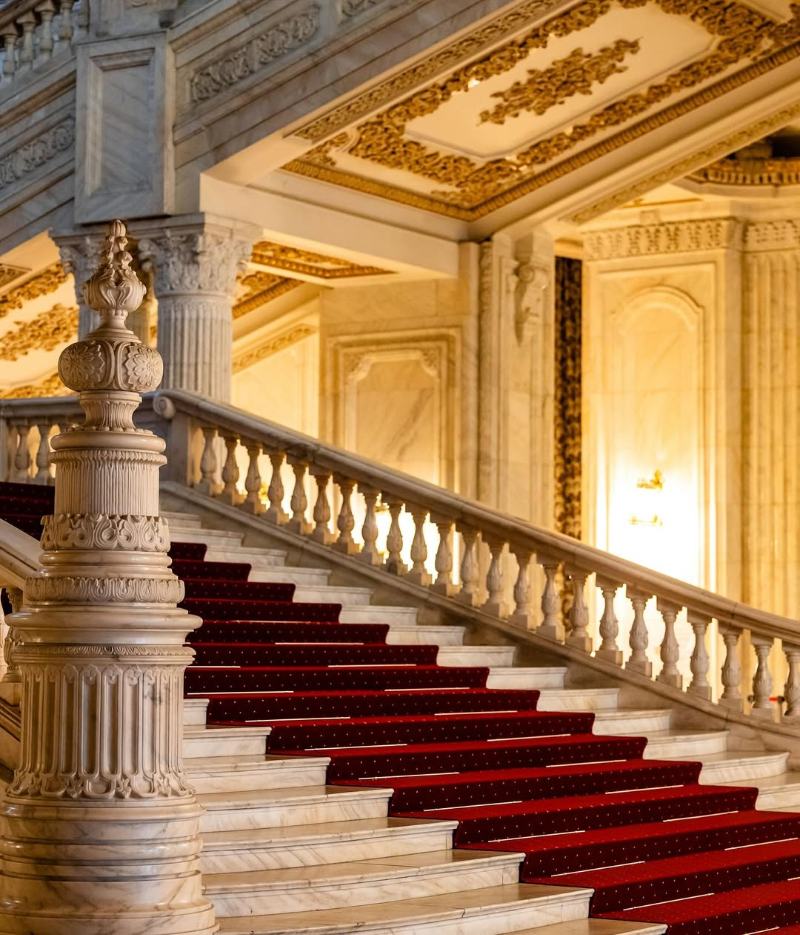
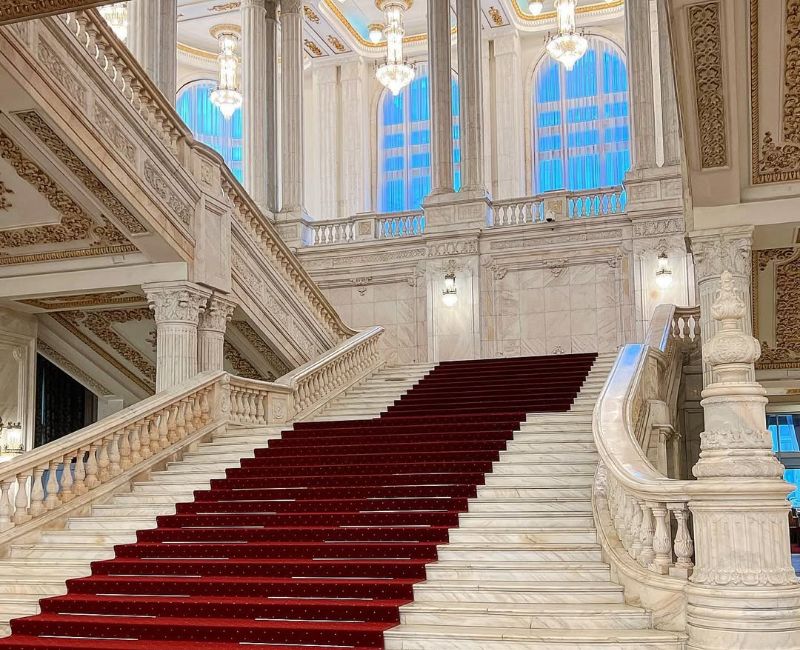
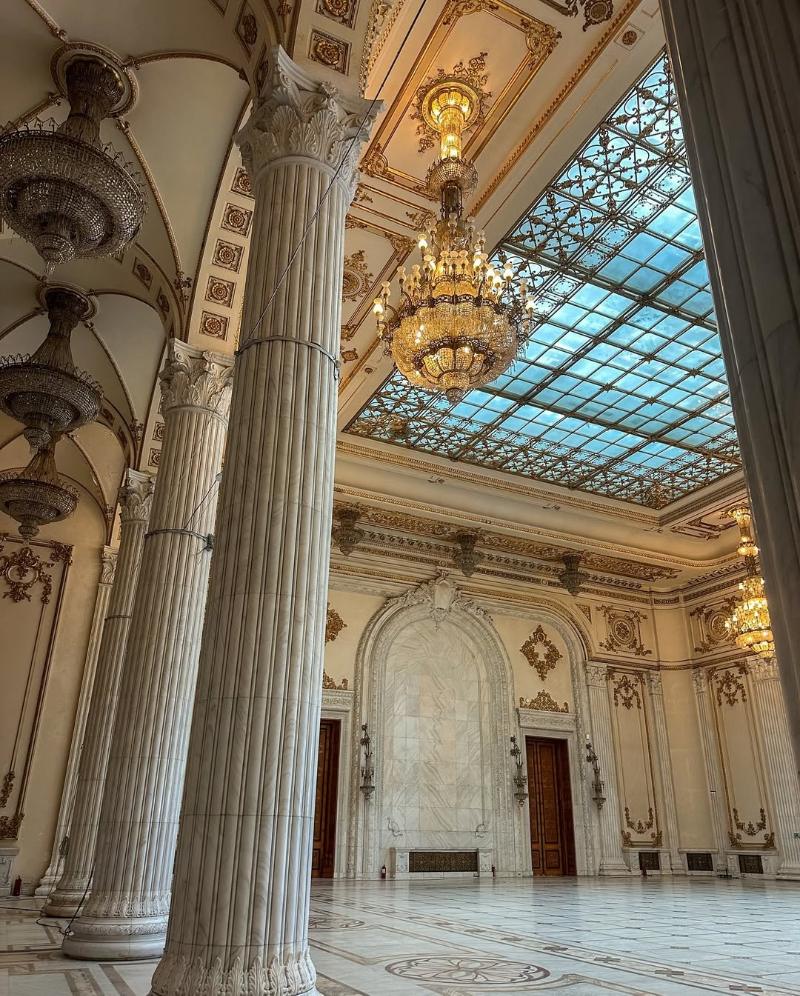
Visitors enter through a marble-lined vestibule that opens to one of the Palace’s most striking features — the grand staircase. Made of white Carrara marble and illuminated by large chandeliers, the staircase was originally designed for official receptions and ceremonial processions. Its proportions are calculated to create a visual illusion: the steps are slightly higher toward the top, making the ascent appear longer and more majestic when viewed from below.
The entrance area sets the tone for the entire building — imposing yet balanced, with perfect symmetry and attention to detail. Massive doors, handcrafted from Romanian oak, and high ceilings adorned with plaster reliefs emphasize the precision and artistry behind the project.
Hall of Honor
The Hall of Honor (Sala de Onoare) serves as one of the Palace’s main ceremonial spaces. It is used for official receptions and state events. The hall features marble columns, tall mirrors, and richly decorated ceilings that combine Romanian motifs with classical forms. Large crystal chandeliers reflect light across polished stone floors, creating an atmosphere both formal and elegant.
Union Hall
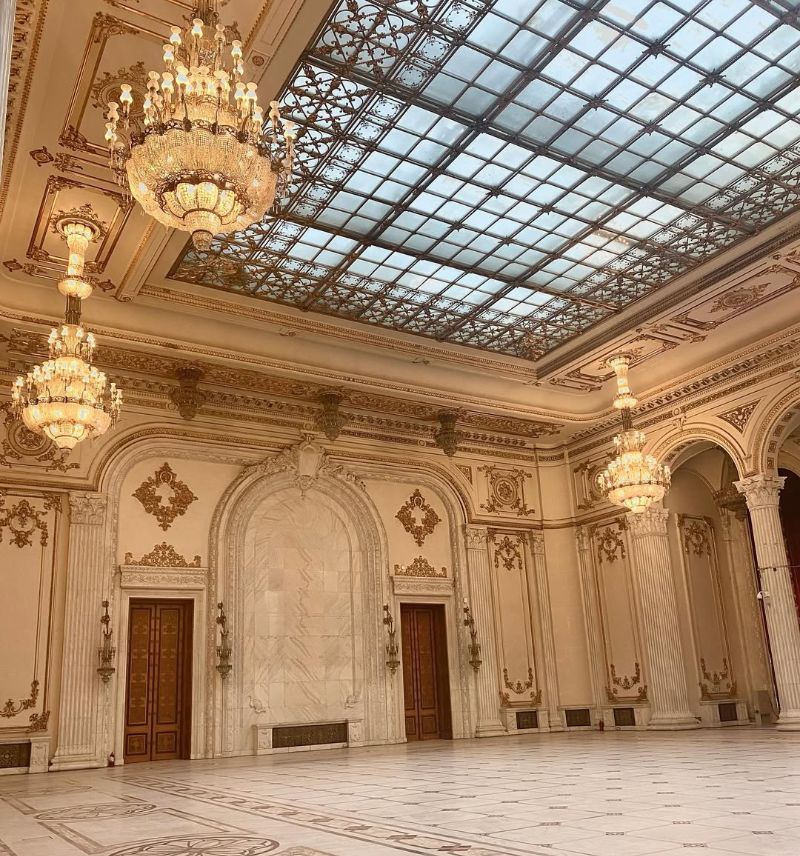
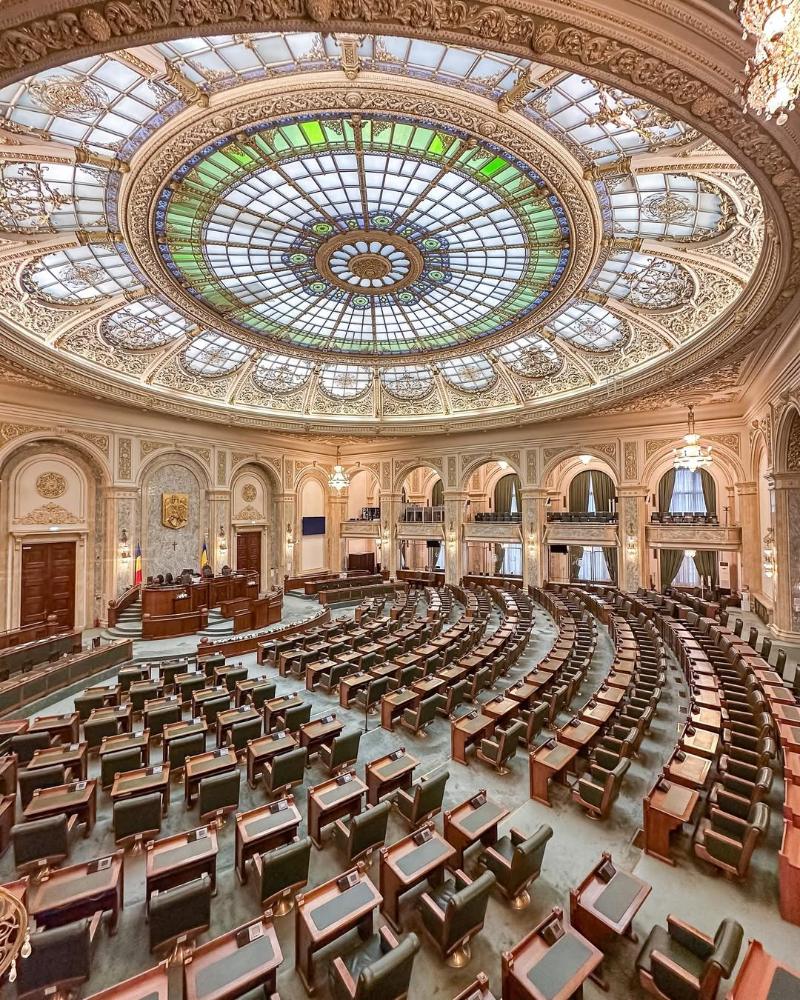
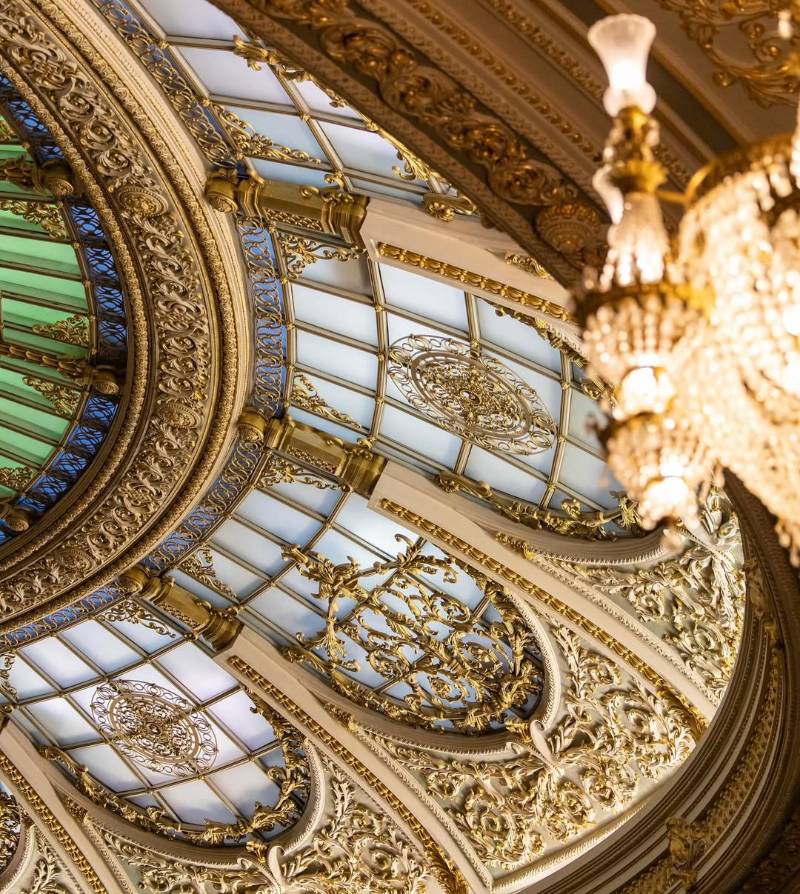
The Union Hall (Sala Unirii), one of the largest rooms in the Palace, is often used for important national and international gatherings. Measuring more than 2,200 square meters, it can accommodate several hundred guests. The hall is distinguished by its monumental proportions, detailed plasterwork, and an immense skylight framed by crystal. It is among the most photographed interiors of the building.
Human Rights Hall
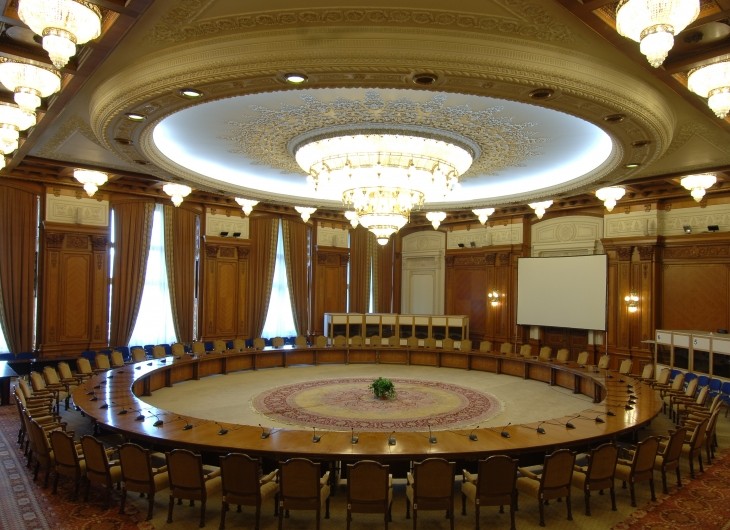
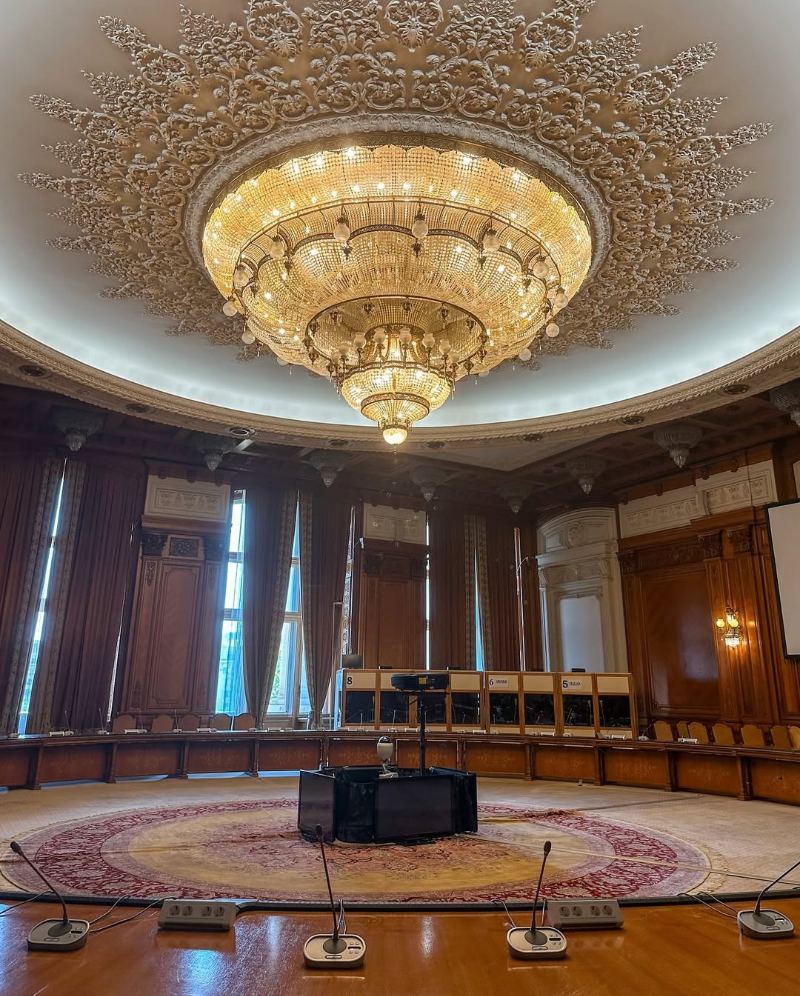
The Human Rights Hall (Sala Drepturilor Omului) is another highlight of the visitor circuit. Its design combines symmetry with softer decorative elements, reflecting its purpose as a venue for parliamentary sessions and cultural conferences. The warm tones of the wooden paneling and the large windows that allow natural light to flood the space give it a more welcoming appearance compared to the more formal halls.
Other Notable Areas
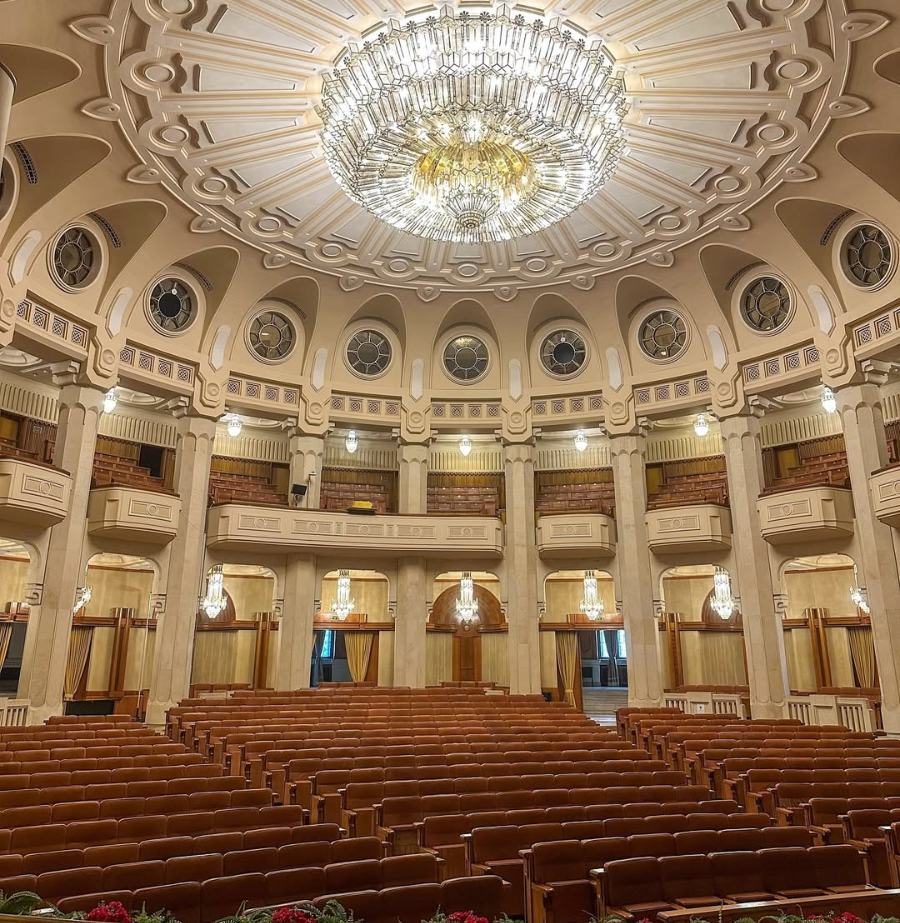
Beyond the main ceremonial rooms, visitors can also see several smaller yet equally impressive spaces, including the Nicolae Bălcescu Hall, the Alexandru Ioan Cuza Hall, and the C.A. Rosetti Hall, each named after key figures in Romanian history. Corridors stretch for kilometers, connecting rooms that vary in function — from conference spaces and offices to exhibition halls.
The Palace also contains underground levels, some of which remain closed to the public. These include service tunnels, storage areas, and the partially completed bunker designed during the 1980s for government protection in case of emergency.
Visitor Information
The Palace of the Parliament is open to the public year-round and offers several types of guided tours designed to highlight the building’s architectural, historical, and cultural value. Tours are available in multiple languages and are led by trained guides who provide detailed explanations of the building’s construction, symbolism, and current role in Romania’s government.
Tour Experience
A standard tour includes access to several of the Palace’s most impressive areas — the main staircase, the Hall of Honor, the Union Hall, and other ceremonial rooms. Visitors can admire the marble interiors, ornate ceilings, and the craftsmanship that defines each space. Extended tours may include access to additional floors or viewpoints, such as the terrace overlooking Unirii Boulevard.
Tickets and Booking
Palace of Parliament tickets can be purchased on-site or booked in advance online. For security reasons, all visitors must present a valid photo ID when entering the building. It is recommended to arrive 15–20 minutes before the scheduled tour time to complete the registration and security check.
Special rates are available for students, seniors, and groups, and private tours can be arranged upon request. Children under a certain age may enter for free or at a reduced fee, depending on current visitor policies.
Photography and Accessibility
Photography is permitted in most areas of the tour route, though professional equipment may require prior authorization. The Palace is partially accessible to visitors with reduced mobility, with ramps and elevators available on certain routes. Visitors are encouraged to inform staff in advance if special assistance is needed.
Opening Hours
- Monday to Sunday: 9:00 AM – 5:00 PM
- Last entry: 4:00 PM
(Hours may vary on national holidays or during official events.)
Location
The Palace of the Parliament is located at 2-4 Izvor Street, Sector 5, Bucharest, directly across from Constitution Square (Piața Constituției). It lies in the heart of the city, within walking distance from major landmarks such as Unirii Square (Piața Unirii) and Calea Victoriei. The building is approximately 1.5 kilometers from the Old Town, making it easily reachable on foot in about 15–20 minutes.
For visitors using public transportation, the closest metro station is Izvor Station (M1 line), located just a few minutes’ walk from the main entrance. Several bus and tram lines also stop nearby, including those connecting the Palace with key areas such as University Square, Gara de Nord (the main train station), and Victory Square (Piața Victoriei).
Taxis and ride-sharing services are readily available throughout Bucharest, and parking facilities are available near Constitution Square for visitors arriving by car. Walking to the Palace is often recommended, as it allows visitors to enjoy the wide boulevards and the distinctive architecture of the Civic Center district surrounding the building.
Palace of the Parliament Photos